
GST Calculator: How to Calculate GST in India (2026 Guide)
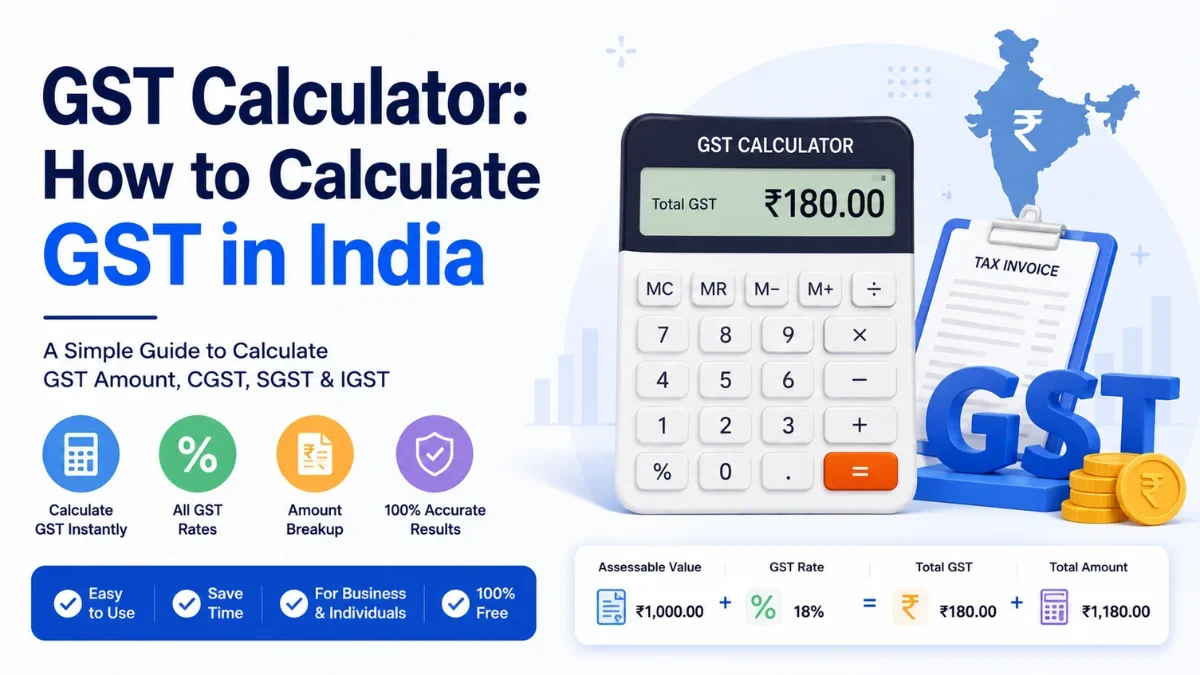
Whether you are pricing a product, checking a bill, or filing returns, you eventually need the same answer: how much GST applies, and what is the final amount? After India's GST 2.0 reform, the slabs are simpler than ever — but the calculation still trips people up, especially the difference between adding GST and extracting it from an inclusive price.
This guide gives you the GST formula with worked examples (both ways), the current 2026 slabs, and how CGST, SGST and IGST split a single rate. To skip the math entirely, use the free Calcon GST Calculator.
What Is GST?
GST (Goods and Services Tax) is India's unified indirect tax, introduced on 1 July 2017 to replace a tangle of older taxes like VAT, service tax and excise. It is a destination-based tax charged at every stage of the supply chain, with credit for tax already paid (input tax credit), so the final burden falls on the end consumer.
A single GST rate is collected in one of two ways, depending on where the buyer and seller are:
• Intra-state (same state): split equally into CGST (to the Centre) and SGST (to the State). An 18% rate becomes 9% CGST + 9% SGST.
• Inter-state (different states): collected as a single IGST at the full rate (18%), later shared between Centre and State.
GST Slabs in India (2026)
The 56th GST Council meeting rationalised the old five-slab system (0/5/12/18/28%). Effective 22 September 2025, GST 2.0 runs on two main slabs plus a luxury rate:
Rate | Applies to | Examples |
0% (Nil) | Essentials & exempt supplies | Fresh produce and milk, many lifesaving drugs, education, individual health & life insurance |
5% | Everyday & priority goods | Packaged foods, common household items (soap, shampoo, toothpaste), agricultural equipment |
18% | Standard rate — most goods & services | Mobile phones, laptops, electronics, and most services |
40% | Luxury & sin goods | Premium cars, aerated drinks, and similar demerit goods (replaces the old 28% + cess) |
Special | Precious metals | Gold & jewellery 3%, rough diamonds 0.25% |
Note: tobacco products continue under the older rate-plus-cess structure until separately notified. Always confirm the exact rate for your item's HSN code, as classifications can change at GST Council meetings.
How to Calculate GST (Adding GST to a Price)
When you have a base (GST-exclusive) price and need to add GST, the formula is simple:
GST amount = (Base price × GST rate) ÷ 100
Final price = Base price + GST amount
Worked example
A product is priced at ₹2,000 (before tax) and falls in the 18% slab:
• GST amount = (2,000 × 18) ÷ 100 = ₹360
• Final price = 2,000 + 360 = ₹2,360
• If it is an intra-state sale: CGST = ₹180 and SGST = ₹180.
How to Remove GST (Reverse / Inclusive Calculation)
This is the part most people get wrong. When a price already includes GST and you want the base amount, you cannot just subtract the percentage. Use the reverse formula:
Base price = Gross price × 100 ÷ (100 + GST rate)
GST amount = Gross price − Base price
Worked example
A bill shows ₹2,360 inclusive of 18% GST:
• Base price = 2,360 × 100 ÷ 118 = ₹2,000
• GST amount = 2,360 − 2,000 = ₹360
Notice you cannot simply take 18% of ₹2,360 (that would give ₹424.80, which is wrong) — because the 18% was charged on the base, not the gross. The Calcon calculator handles both directions automatically.
Quick GST Reference: Common Amounts
Tax on a ₹1,000 base price, by slab, to give you a feel for scale:
Slab | GST on ₹1,000 | Final price | CGST + SGST |
5% | ₹50 | ₹1,050 | ₹25 + ₹25 |
18% | ₹180 | ₹1,180 | ₹90 + ₹90 |
40% | ₹400 | ₹1,400 | ₹200 + ₹200 |
How to Use the Calcon GST Calculator
1. Open the calculator: calcon.in/gst-calculator.
2. Enter the amount.
3. Choose whether GST should be added (exclusive) or removed (inclusive).
4. Select the GST rate (5%, 18%, 40%, or a custom rate).
5. Read the GST amount, the CGST/SGST split, and the net or gross total instantly.
Who Needs a GST Calculator?
• Business owners & shopkeepers — to price products correctly and prepare invoices.
• Freelancers & service providers — to add the right GST to client bills.
• Accountants — to cross-check inclusive and exclusive figures quickly.
• Buyers — to verify the tax on any bill or quotation.
Frequently Asked Questions
What are the GST slabs in India in 2026?
After the GST 2.0 reform effective 22 September 2025, the main slabs are 5% and 18%, with 0% for essentials and a 40% rate for luxury and sin goods. The earlier 12% and 28% slabs were largely merged into these.
How do I calculate GST on a price?
Multiply the base price by the GST rate and divide by 100 to get the GST amount, then add it to the base. For ₹2,000 at 18%, GST is ₹360 and the total is ₹2,360.
How do I remove GST from an inclusive price?
Divide the gross price by (100 + rate) and multiply by 100 to get the base. For ₹2,360 inclusive of 18%, the base is ₹2,000 and GST is ₹360.
What is the difference between CGST, SGST and IGST?
On a sale within the same state, GST splits equally into CGST (Centre) and SGST (State). On an inter-state sale, it is charged as a single IGST at the full rate.
Is GST the same on goods and services?
Rates are assigned by item or service, not by category, so both goods and services can fall in any slab. Most standard services sit at 18%.
The Bottom Line
GST 2.0 made the slabs simpler, but the add-versus-remove distinction still matters — get it wrong and your pricing or bill is off. Use the formulas above to understand it, then let the free Calcon GST Calculator do it instantly, both ways, with the CGST/SGST split worked out for you.
Disclaimer: GST rates and slabs are stated as per the GST 2.0 structure effective 22 September 2025 and may change at future GST Council meetings. Item-specific rates depend on HSN/SAC classification. This guide is for general information only, not professional tax advice — consult a qualified tax professional for filing.
Related Tools
Get new tools & guides
Occasional updates, no spam.
Latest Posts
PPF vs SIP: Where Should You Put Your Money?
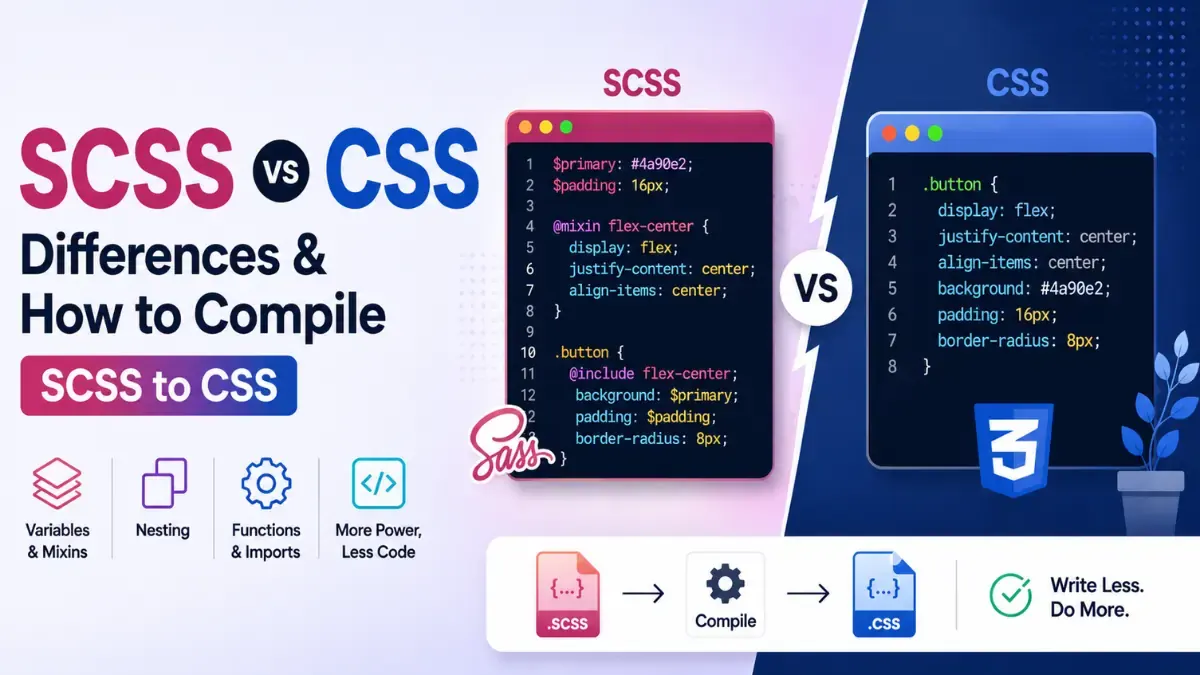
SCSS vs CSS: What's the Difference & How to Compile SCSS to CSS
PPF vs Mutual Fund SIP: Which is Better for Long-Term Wealth Creation?

How to Resize Photo & Signature for Online Exam Forms (Size + KB Guide)
How to Resize Image Dimensions Online (Width, Height & Aspect Ratio)